Showing posts with label ougd303DC. Show all posts

Tuesday, 29 May 2012

FINAL EVALUATION

After feeling dissapointed with my work from the last module, I think I have significantly improved elements of my practice throughout my FMP. I feel like both the projects that I selected for myself as well as some of the live briefs I have completed have provided me with some work for my portfolio that I am content with and that I feel really represents who I am as a designer and where I want to go from here.
I also feel that I have explored range and distribution more fully than I have in previous modules. I have not limited myself to what I think is achievable, but instead let my ideas drive the work, figuring out how best to execute or propose them later on. This in tern has forced me to explore areas of research, such as specific print processes, that I had not previously explored in this amount of detail. I think that overall this has resulted in some much more interesting work than I have previously created.

On reflecting on my statement of intent from the start of the module, I have actually met the majority of intentions that I outlined in my rationale, such as a more thorough investigation of print processes, print visits, engaging in live briefs, securing placements, developing stronger concepts within my very visually based work, continuing with illustration in order to strengthen my skills, designing for surface application rather than packaging itself, exploring identity but not branding, exploring colour and pattern and designing for a range of budgets. Another intention I outlined was to contact a range of studio's that I am interested in, in order to develop a better understanding of how image driven design, custom typography and applied illustration fit in a commercial environment. I think that I have explored this through both my ppd and my research for my design context publication. One intention from my statement of intent was that my work would mainly be intended for print, but has the potential to be applied to screen based media. I think that throughout this module my interest in design for digital application has grown and this is now an area that I would very much like to develop in. I would say that the themes and audiences that I outlined in my statement of intend remain very much the same, along with the design diciplines that I outlined. However, I would add design for digital application to my secondary concerns, including design for motion graphics as well as design for icons as I feel that these are two areas that I have only just scratched the surface of, but would like to continue to develop my skills in this area after I leave.

In terms of skills which I outlined as wanting to further throughout my FMP, I think that I have developed most of them. In particular developing my knowledge of industrial production, developing my research skills, drawing more regularly in order to improve, improving my skills involved with working with clients such as communication, pricing and negotiating deadlines, and developing my software skills including learning how to use Fontographer which I had previously not used. Time management has been something that I have constantly been trying to work on ever since first year. I think that the issue is not to do with my dedication of time to the course, but more to do with how I spend the time that I have. I think that the last module really highlighted this and I feel that there has been a genuine improvement in this area. My action plans and timetables have been far more detailed and updated more regularly, outlining specific tasks rather than general projects. I made sure that I was spending a more equal amount of time on each brief rather than getting carried away with one or two and neglecting the others. I reflected on how the brief would work as a whole rather than focusing on specific, sometimes irrelevant deliverables. I think that this massively improved the quality of the ranges within my briefs. As a result I think that my skills at fully resolving a brief have improved. Last module I altered my briefs a lot in order to resolve them which is not a very realistic way of working. This module I have stuck to my main briefs, the only alteration being that I have expanded them further than I had initially outlined in my statement of intent.
One skill I wanted to improve was screen printing, which I have only used in one brief. In hindsight I wish I had tried out some more adventurous printing and made use of this facility, however I intend to do some recreational printing after hand in. Other skills that I have developed in this module include writing my own copy, and visualising large scale ideas such as interior and exterior settings, installations and displays.

After a tutorial half way through the module I identified that I wanted to develop an ability to produce a range of differing type styles, to strengthen my portfolio and to provide more opportunities for freelance work in the future as trends and demands change. Once this was brought to my attention I actively set out to ensure that I explored as many styles as possible through my briefs which I feel I did successfully. On coming third at the Sh awards I was commended on my broad range of type styes which made me feel that I have definitely improved this ability, however I need to ensure that I continue developing fresh styles when I leave, even if it has to be through self- initiated work.


Strengths I have identified from this module :
  • The most successful briefs and most interesting visual solutions are the ones that started with a strong concept and were initially fulled by in depth research.
  • I have explored a range of differing type styles.
  • I have considered application of type to a range of different mediums.
  • I covered a range of subjects/themes/audiences in my briefs.
  • All research activites outlined in statement of intent were met.
  • I have made contact a broad range of professionals.
  • Completed two placements which have significantly informed my practice and helped me with my briefs.
  • Had successful experience working on live briefs.
  • As a result of this, I have built a network of clients and contacts.
  • I have started to visualise and embrace larger scale ideas.
  • I have managed to use illustration as a relevant and useful part of my practice as well as for live briefs.
  • I have developed confidence in proposing work for digital application.
  • I have developed a systematic approach to developing type work which I can continue to use when I leave and potentially work on freelance briefs where I will be required to answer the brief independently.
  • My blogs have been constantly up to date and my work process thoroughly documented.
  • I have employed more thorough and relevant research strategies.
  • My dedication to the course is consistent to the previous module, but I have improved my time management skills which I feel has impacted my work significantly.
  • I have improved my ability to work through a brief effectively and consider a more adventurous and more considered range.

Weaknesses/Areas of improvement I have identified from this module :
  • Photography skills have not improved from the last module.
  • Photo-editing skills have not improved significantly.
  • While I think that my software skills have improved this module, particularly in Photoshop and inDesign, I think that I need to bring myself up to speed with Illustrator.
  • I don't feel that I have made use of the screen printing facilities as much as I could have.
  • I don't feel that I made use of the web design sessions as much as I could have done as I feel like it is a really useful skill to have especially in terms of obtaining freelance work.
  • My crafting skills have not improved very much and my mock ups are not of as high quality as I had intended.
  • I think that achieving a first for my last two modules of second year might have made me loose sight of the areas I need to work hard at and perhaps not recognising my weaknesses. I think that under-achieving in the last module has given me the drive to evaluate my weaknesses and overcome them as much as possible this module. This informs me that I need to not become over-confident and need to continue to evaluate my practice critically and objectively when I go into the industry.
  • While I think I have improved my time management and ability to be more focussed, I think it is within my nature to be a bit scatty so I need to continue to enforce organisation on myself when I leave the course, especially if I am to go freelance in the future.

I feel that the FMP has really helped me to establish where I see myself fitting within the industry. It has also enabled me to develop a range of skills that will be integral to my practice when I leave. A combination of placements, my own development lead by the course structure and a genuine interest in the subject have given me the confident to produce work that I would never have imagined at the start of this course. My position statement was 'Applied custom lettering and illustration with a focus on surface application and promotion'. Interestingly I feel that this really has not really changed, and is more relevant now than it was when I wrote it. My final position statement as I leave the course is;
        'Applied custom lettering and illustration with a focus on surface application and identity.'


Monday, 28 May 2012

Packaging for design context publication

I wanted the packaging, which is a belly band, to be lo-fi to fit with the style of the posters. I wrote it in my own hand writing to make it even more personal.


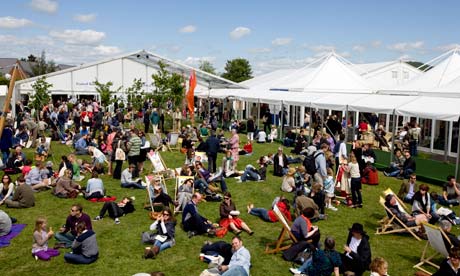
Hay Festival

The book editions I have designed are for distribution at the Hay Festival so I have been researching some images from the festival to inspire me for my context mock ups and to help me come up with some proposals.


Sunday, 27 May 2012

Research into types/weights of stock for book publishing

Text pages of the book: 75 GSM Maplitho/Natural
For color book/art book etc.: 90 GSM to 130 GSM Matt Art Paper & Fine Art Paper
For Paperback cover: Minimum 250 GSM to 300 GSM Art Card
For Hardback jacket cover: Minimum 170 GSM Art Paper

Saturday, 26 May 2012

Marks & Spencers online shop research


Type development for design context publicaiton

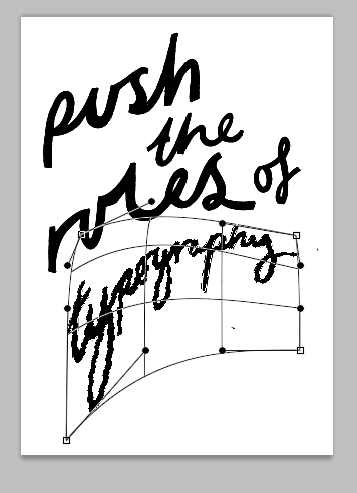
Each poster is designed to have a quote from the text on the reverse side in a hand drawn illustrated style which reflects my practice....
I have tried to reflect the quote in the style of the lettering.


Book editions - context

I have been researching how I can put the covers into more of a context. I think that it might me more interesting if they were intended for a book fair, exhibition or independent retailer rather than simply for a mainstream book store.
I have been looking at the possibility of V&A exhibition and supporting products for the gift shop....


DC poster proofs

I printed my design context designs so that I could check for errors more easily and check that the scale/point size/layout etc is working. I am glad I did as there were quite a few alterations!


Types of greetings cards

Standard Greeting Cards: A standard greeting card is printed on high-quality paper (such as card stock), and is rectangular and folded, with a picture or decorative motif on the front. Inside is a pre-printed message appropriate for the occasion, along with a blank space for the sender to add a signature or handwritten message. A matching envelope is sold with the card. Some cards and envelopes feature fancy materials, such as gold leaf, ribbons or glitter.

Photo Greeting Cards: In recent years, photo greeting cards have gained widespread popularity and come in two main types. The first type are photo insert cards in which a hole has been cut in the center. Your photo slides in just like a frame. The second type are printed photo cards in which the photo is combined with artwork and printed, usually on a high-end digital press, directly onto the face of the card. Both types are most popular for sending holiday greetings such as Christmas, Hanukkah & for baby showers.

Personalised Greeting Cards: Websites using special personalisation technology, such as Moonpig, allow consumers to personalise a card which is then printed and sent directly to the recipient.

Musical Greeting Cards: Recently greeting cards have been made that play music or sound when they are opened. They are commonly 3D handmade birthday cards which play traditional celebration songs such as Happy Birthday To You.

Electronic Greeting Cards: (also called E-cards) Greeting cards can also be sent electronically. Flash-based cards can be sent by email, and many sites such as Facebook enable you to send greetings. More recently, services have launched which enable you to send greetings to a mobile phone by text message. Many of these electronic services offer open or anonymous chat, to enable further discussion.

Pop up Cards: Pop up Cards are normally cards that, once opened, have a picture coming outward that then giving it a surprise to the reader, giving it a 'pop out' effect. They are the most sophisticated cards that can be easily made at home.

Friday, 25 May 2012

DC posters printed

I am relatively pleased with the posters as a set, however I think that individually some of them are stronger than others.


Paper quality/gsm research


Tracing paper 
Transparent, hard and strong. It is good
for tracing fine details as it is
translucent. Tracing papers strength
enables you to scrape off mistakes using
a craft knife.
Used for working drawings.
60/90 gsm

Layout paper 
Thin transparent paper with a smooth
surface. Used for sketching and
developing ideas. It is translucent so
ideas can be traced and altered.
However layout paper is looked at as a
cheaper medium.
It is often used in preparation of final
ideas and is used for tracing usually.
50 gsm

Cartridge paper 
It is more expensive than copier paper.
It is creamy white paper, slight texture
usually .
General used for drawing but can be
used with paint as it has a good quality
surface for pens, pencils and markers. It
can also be used with watercolours,
pastels, crayons, inks and gouache.
120-150 gsm

Photocopier paper 
Fairly cheap when bought in bulk and is
available in a range of colours. It is also
used for photocopying and inkjet
printing usually.
General used for drawing but can be
used with paint as it has a good quality
surface for pens, pencils and markers. It
can also be used with watercolours,
pastels, crayons, inks and gouache.
80 gsm

Corrugated card 
Contains two or more layers of card with
interlacing fluted inner section. The
fluted inner section adds strength to the
card without a huge increase within its
weight.
It is mainly used for packing items that
need protecting during shipping.
250+ gsm


Bleed proof paper 
Bleed proof paper is similar to cartridge
paper but it is particularly good at
separating water based paints and pens
so they don’t run into areas where you
don’t want them.
It is mainly used in for important
presentations where quality is needed.
120-150 gsm


Sugar paper 
Sugar paper is coloured paper which
comes in contrasting colours it is mainly
used for tonal drawings. Various weights
and textures are available for different
tasks.
It is mainly used for display work and
mounting drawings, however it will fade
in sunlight over time.
100 gsm


White board 
White board is a strong medium it is
bleached so it provides a good surface
for printing.
It is mainly used for good quality
packaging and book covers.
200 - 400 gsm

Duplex board 
Duplex board is a cheaper version of
white board; it also provides different
textures for printing.
It is mainly used in food packaging as
recycled materials cannot be used for
this purpose.
230 - 420 gsm

Ink jet card 
Ink jet card is treated so that it can go
through all types of inkjet printers.
It is used for high quality print finishes
on inkjet printers only.
120 - 280 gsm


Cardboard
Cardboard is a cheap, recyclable, stiff
board which has a good surface to print
onto.
It is mainly used for packaging, boxes
and cartons.
125 - 300 gsm


Isometric paper 
Isometric paper is a ready made printed
sheet with isometric lines printed on it.
These lines are drawn at 30 / 60 and 90
degrees.
It is mainly used as an aid for isometric
drawings.
80 - 100 gsm


Grid paper 
A ready printed grid sheet with vertical
and horizontal lines on it. These lines
help working drawings such as
orthographic projection. These grids are
measured in millimetres.
Mainly used for working drawings.
80 - 100 gsm

Bus Shelter ads research

Backlit poster paper: Ultraform Opaline C2459-114
C2S (coated 2 side) digital print ready poster stock. It is resistant to both UV rays and the weather making it stable for outdoor as well as indoor poster applications. Ultraform Opaline is engineered to provide excellent thermal stability and outstanding moisture resistance. It's ultrasmooth backlit printing surface provides superior color resolution and ink fidelity for transportation, indoor and outdoor kiosks and wall mounted poster systems. It provides excellent results with both UV and solvent printers.

(Digitally printed)

Bus advertising costing and spec research


Bus Advertising Graphics
Superside6108mm x 658mm£80.00
T-side main body7274mm x 658mm£94.50
T-side stem1166mm x 1143mm£26.00
Skyliner7010mm x 254mm£35.00
Streetliner 10ft3048mm x 508mm£30.00
Streetliner 13ft3963mm x 508mm£40.00
Single Deck 7ft2134mm x 508mm£21.50
Single Deck 8ft2438mm x 508mm£24.00
Super Rear1524mm x 508mm£17.20
Standard Rear1217mm x 455mm£13.60
Headliner660mm x 203mm£3.90
Bulkhead380mm x 457mm£5.20


http://www.redcliffe.co.uk/point_of_sale/bus_advertising_graphics.htm#ixzz1vsTNfcfv

Advertising space dimensions research


Clear Channel Format Summary

Adshel 6 Sheets

Dimensions

1800 mm x 1200 mm
1.8 m x 1.2 m
5.905 ft x 3.937 ft

Area

2.16 m2
23.25 ft2
Adshel 6 Sheets product dimensions

48 Sheets

Dimensions

3000 mm x 6000 mm
3 m x 6 m
9.842 ft x 19.68 ft

Area

18 m2
193.7 ft2
48 Sheets product dimensions

Mega 6 Sheets

Dimensions

7500 mm x 5000 mm
7.5 m x 5 m
24.60 ft x 16.40 ft

Area

37.5 m2
403.6 ft2
Mega 6 Sheets product dimensions

Connect phoneboxes

Dimensions

1710 mm x 673 mm
1.71 m x 0.67 m
5.610 ft x 2.208 ft

Area

1.15083 m2
12.38 ft2
Connect phoneboxes product dimensions

96 Sheets

Dimensions

3000 mm x 12000 mm
3 m x 12 m
9.842 ft x 39.37 ft

Area

36 m2
387.5 ft2
96 Sheets product dimensions

Mega 96 Sheets

Dimensions

4650 mm x 18600 mm
4.65 m x 18.6 m
15.25 ft x 61.02 ft

Area

86.49 m2
930.9 ft2
Mega 96 Sheets product dimensions

Mega 48 Sheets

Dimensions

4500 mm x 9000 mm
4.5 m x 9 m
14.76 ft x 29.52 ft

Area

40.5 m2
435.9 ft2
Mega 48 Sheets  product dimensions